A simple skincare routine for your 40s
Four steps in the morning, three at night. What changes in your 40s, and what you can stop doing.
By the editorsUpdated 3 min read
How we chose: This is a research roundup. We compared formulas, finishes, shade ranges and what buyers report after weeks of use. It isn't a hands-on test, and we'll say so in the post when we've tried something ourselves.
If you buy through our links we may earn a commission. It never decides what we recommend. How we make money
Skin in your 40s is mostly just slower. It holds less water and takes longer to bounce back, and the sun you got in your twenties starts showing up as spots. The good news is that the routine that handles all of that is shorter than the one you probably had at 30.
What changes in your 40s
The changes people notice most are dryness, especially around the eyes and on the cheeks, and dark spots that used to fade in a few weeks and now don't. Fine lines get a little deeper too, mostly where your face moves.
Hormones play a part. Plenty of people notice their skin getting drier or more reactive in the years before menopause, and products that were fine for a decade suddenly sting. If that's happening to you, it isn't in your head.
The morning routine
Morning, about four minutes
Step 1: Cleanse
Lukewarm water and about thirty seconds. On very dry mornings, a splash of water is enough.
Step 2: Treat
Three or four drops on dry skin. It helps with dark spots and backs up your sunscreen. Wait a minute before the next step.
Step 3: Moisturize
A light gel so your sunscreen and makeup sit well on top. If you're dry, use the CeraVe cream from the night routine instead.
Step 4: SPF
Two finger lengths for face and neck, every day. This step matters more than everything else here combined.
The night routine
Night, about three minutes
Step 1: Cleanse
Massage it over dry skin to melt makeup and sunscreen, then rinse. On no-makeup days, the gentle cleanser alone is fine.
Step 2: Treat
A pea-sized amount for your whole face, two nights a week to start. Skip the area right around your eyes for the first month.
Step 3: Moisturize
A generous layer. On retinoid nights, put it on before the retinol if your skin gets irritated. It softens the effect.
How to start a retinoid without hating it
Most people who give up on retinoids start too fast. Two nights a week for the first month, then three, then every other night if your skin is fine with it. Some flaking and dryness in the first few weeks is normal. Burning and redness that doesn't settle isn't, so back off.
Once your skin is completely used to retinol (usually after three to six months) and you want more, a retinal is the next step up. This is a good one to start with:
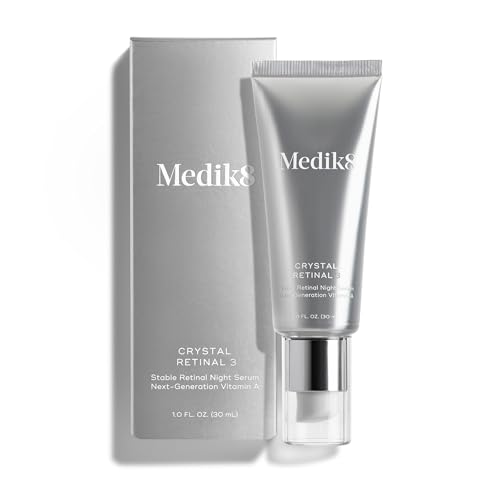
Medik8
Crystal Retinal 3
A retinal serum, a faster-acting relative of retinol, sold in graduated strengths so you can step up slowly.
Skip it if you're still getting flaky on retinol. Stay where you are for a while.
What you can stop doing
- Toners that are mostly alcohol. They feel fresh for a minute and leave skin drier.
- Harsh scrubs. Your skin turns over more slowly now, and scrubbing doesn't fix that. It just irritates.
- Separate products for every concern. One good serum and a retinoid cover most of it.
- Eye creams you bought for the tiny jar. For most people, a dab of your regular moisturizer does the same job.
When to see a dermatologist
If a spot is changing shape or color, bleeds, or just looks different from the rest, get it checked. The same goes for redness or breakouts that don't respond to a gentle routine after a couple of months. A dermatologist can also prescribe tretinoin, which is stronger than anything you can buy on Amazon.
Save it for later
Pin this so you have the list next time you're shopping.