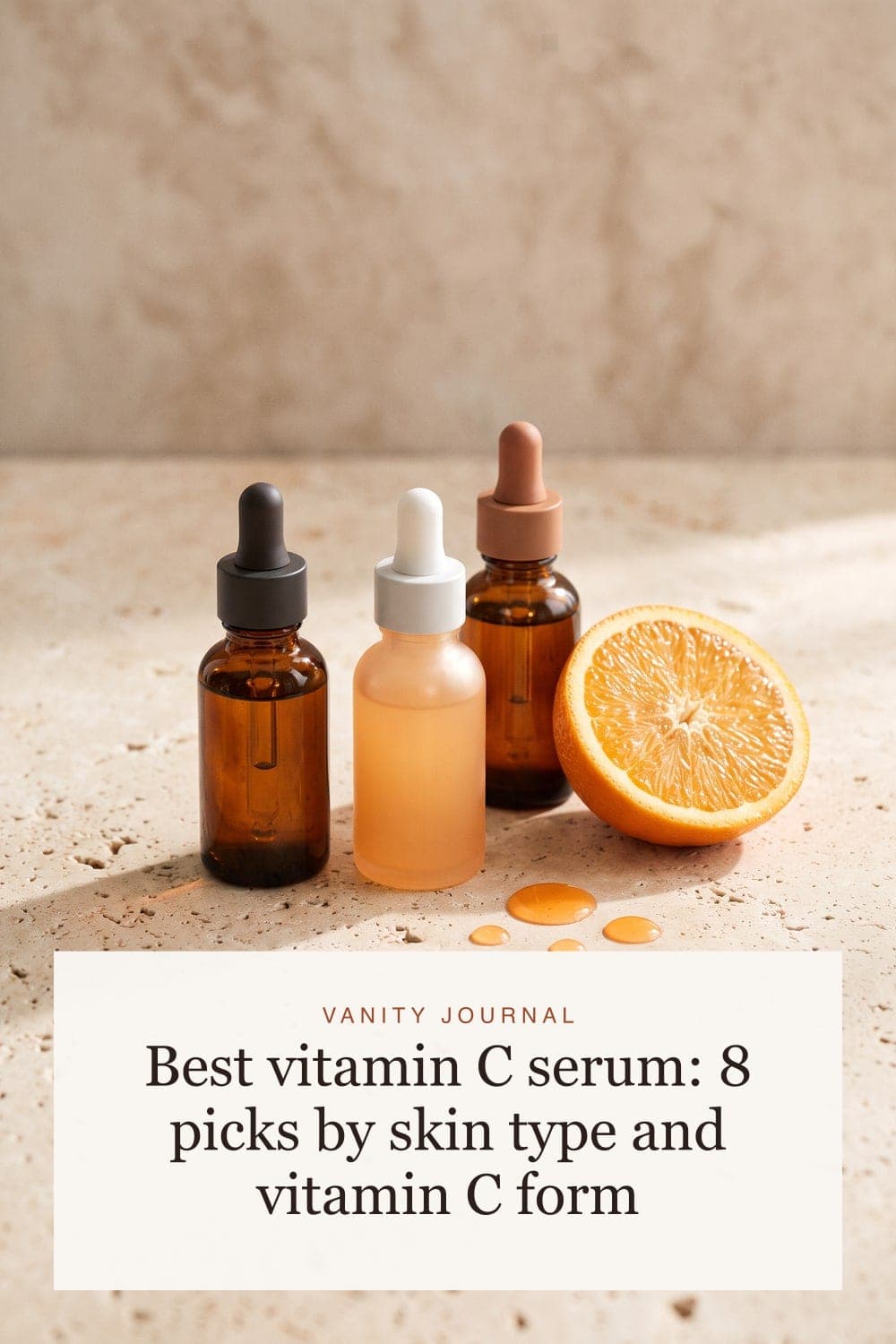
The 8 best vitamin C serums of 2026, by skin type
Eight vitamin C serums sold on Amazon, sorted by the form of vitamin C they use, with a gentle pick for sensitive skin and one splurge worth knowing about.
By the editorsUpdated 4 min read
How we chose: This is a research roundup. We compared formulas, finishes, shade ranges and what buyers report after weeks of use. It isn't a hands-on test, and we'll say so in the post when we've tried something ourselves.
If you buy through our links we may earn a commission. It never decides what we recommend. How we make money
The best vitamin C serum is the one your skin tolerates and you'll actually use every morning. That sounds obvious, but the category is confusing: some bottles use pure L-ascorbic acid, some use gentler derivatives, and the label rarely says which.
We sorted eight of the most popular vitamin C serums on Amazon by the form of vitamin C inside, because that decides how strong, how stable and how irritating a serum is likely to be.
Quick picks
- Best overall: Timeless 20% Vitamin C + E Ferulic Acid Serum
- Best budget: TruSkin Vitamin C Serum
- Best for sensitive skin: The Ordinary Ascorbyl Glucoside Solution 12%
- Best for oily and breakout-prone skin: La Roche-Posay Pure Vitamin C12 Serum
- Best for layering with your moisturizer: Paula's Choice C15 Super Booster
- Best of both vitamin C forms: Naturium Vitamin C Complex Serum
- Best natural-leaning formula: Mad Hippie Vitamin C Serum
- Best splurge: SkinCeuticals C E Ferulic
How we picked
This is a research roundup. We didn't test these serums ourselves. We compared ingredient lists and the vitamin C form each one uses, then looked at how buyers describe them after a few weeks of use. We looked for patterns: stinging, a sticky feel, serum that turned dark brown in the bottle, or no visible change.
We dropped serums with vague labels, no stated vitamin C form, or a recurring complaint about oxidizing quickly. We also kept a spread of forms, since pure L-ascorbic acid and derivatives suit different skin.
The best vitamin C serums of 2026
 Best overall
Timeless
1. 20% Vitamin C + E Ferulic Acid Serum
A budget take on the classic vitamin C, vitamin E and ferulic acid trio. Vitamin C oxidizes, so keep it somewhere cool.
Skip it if your skin stings easily. At a 20% strength, L-ascorbic acid can sting on a damaged or very sensitive skin barrier.
Best for: Dull skin and dark spotsCheck price on Amazon Best budget
TruSkin
2. Vitamin C Serum for Face
A lightweight serum built on sodium ascorbyl phosphate, a gentler vitamin C derivative, with hyaluronic acid, vitamin E, aloe and jojoba oil. Buyers often describe it as thin and non-sticky.
Best for: Sensitive, budget-mindedCheck price on Amazon Best for sensitive skin
The Ordinary
3. Ascorbyl Glucoside Solution 12%
A water-based serum with 12% ascorbyl glucoside, a stable and mild vitamin C derivative. The texture is thin and slightly tacky, and buyers with reactive skin tend to tolerate it well.
Skip it if you want the fastest, strongest result. Derivatives are gentler but take longer to convert in skin.
Best for: Sensitive skinCheck price on Amazon Best for oily skin
La Roche-Posay
4. 12% Vitamin C Face Serum with Salicylic Acid
A 12% L-ascorbic acid serum with salicylic acid and hyaluronic acid, aimed at dull skin and uneven texture. The formula can turn slightly yellow with air exposure.
Skip it if your skin is dry or very reactive. The salicylic acid and the lower pH are a lot on top of vitamin C.
Best for: Oily, dull skinCheck price on Amazon Best for layering
Paula's Choice
5. C15 Super Booster
A 15% vitamin C booster with vitamin E, ferulic acid and ergothioneine, made to mix a few drops into your serum or moisturizer. That lets you control the strength.
Best for: Adjustable strengthCheck price on Amazon Best of both forms
Naturium
6. Vitamin C Complex Serum
Combines L-ascorbic acid with sodium ascorbyl phosphate and adds glutathione. Brand copy positions it as gentler than a straight acid serum, at a less acidic pH.
Best for: Dullness, first-timersCheck price on Amazon Best natural-leaning formula
Mad Hippie
7. Vitamin C Serum
Uses sodium ascorbyl phosphate with ferulic acid, hyaluronic acid and vitamin E in a plant-based formula. A gentler pick than pure L-ascorbic acid, with a light botanical scent.
Best for: Gentle brighteningCheck price on Amazon Best splurge
SkinCeuticals
8. C E Ferulic
The classic L-ascorbic acid, vitamin E and ferulic acid serum the Timeless pick is modeled on. SkinCeuticals sells mainly through authorized retailers, so on Amazon check that the seller is legitimate before you buy.
Skip it if you're new to vitamin C. It's a strong formula, so start with something gentler and work up.
Best for: Splurge, dark spotsCheck price on Amazon
How to choose a vitamin C serum
Start with the form. L-ascorbic acid is the most studied and the strongest version of vitamin C, but it needs a low pH to work, which is why it can sting. Derivatives such as sodium ascorbyl phosphate and ascorbyl glucoside are more stable and much gentler, and they suit sensitive and acne-prone skin. The tradeoff is that they have to convert to active vitamin C in the skin, so many people expect slower results.
Strength matters less than the label suggests. For L-ascorbic acid, the range most people stick to is roughly 10 to 20 percent, and a higher number doesn't always mean better results. It does mean a better chance of irritation. If you're new to vitamin C, start lower and use it every other morning for the first two weeks.
Packaging is not a detail. Vitamin C oxidizes when it meets light and air, so look for an opaque or dark glass bottle with a pump or a tight dropper, and keep it out of a sunny bathroom. A serum that turns dark orange or brown has oxidized, and you should replace it. A pale yellow tint is normal for several of the serums here.
Match the texture to your skin. Oily skin usually prefers a thin, watery serum. Dry skin is better with one that has hyaluronic acid or sits under a good moisturizer. If you have dark spots, pair your serum with sunscreen every morning, because vitamin C does little if the spots keep getting new sun.
Questions people ask
Can you use vitamin C and retinol together?
Yes, but not in the same step if your skin is sensitive. The usual approach is vitamin C in the morning and retinol at night. That keeps each at its best pH and lowers the chance of irritation.
When should you use vitamin C serum, morning or night?
Morning is the common choice. Vitamin C is an antioxidant, so it adds a layer of protection under sunscreen. It's not a replacement for sunscreen, though. You can use it at night too if that suits your routine better.
What percentage of vitamin C is best?
For pure L-ascorbic acid, most people do well in the 10 to 20 percent range. Derivatives are often labeled with a different number and aren't directly comparable, so judge them by how your skin responds rather than by the percentage.
How long does vitamin C take to work?
Dullness and dark spots fade slowly, so plan on a couple of months of daily use before judging a serum. Sunscreen every morning helps keep the spots from coming back.
Why did my vitamin C serum turn brown?
It oxidized, meaning it reacted with air and light. It won't usually harm you, but it has lost most of its potency. Store it somewhere cool and dark, and replace it if it's dark orange or brown.
If you're building a routine around one of these, our Amazon skincare finds under $25 covers a cleanser, moisturizer and sunscreen to go with it. If you're in your 40s, the skincare routine for your 40s shows where vitamin C fits in the morning.
Save it for later
Pin this so you have the list next time you're shopping.